What We Learned From One-on-One Interviews With Grocery Leaders — Part 1
9/17/2026
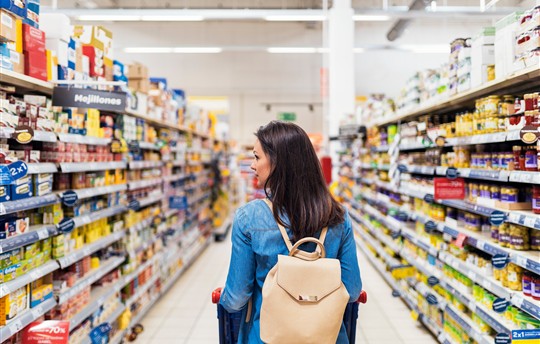
In addition to tight profit margins, modern grocers must now deal with shrinking market share, changing shopper habits, higher fulfillment costs, and new technological hurdles.
To understand how grocery leaders are responding to these pressures, Iridio℠ by RRD conducted in-depth, one-on-one interviews with industry leaders at the director level or higher across the United States. The resulting insights, gleaned from The 2026 Grocery Perspectives Report, illuminate how key industry players are competing, growing, and — perhaps most importantly — connecting with shoppers.
In part one of this two-part blog, we’ll detail the report’s findings on trends challenging grocery operations — and highlight actionable strategies to overcome them, including:
- Pivot to accommodate changes in consumer buying trends
- Integrate a more diverse mix of products and services
- Build omnichannel experiences
1. Pivot to accommodate changes in consumer buying trends
Today’s shoppers are more selective, more value-driven, and increasingly drawn to formats that fit their dietary priorities and budgets, the report indicates. Demand is being impacted by various factors — from health-conscious behaviors and GLP-1 medications to inflation and changing household dynamics.
As a result, grocers must be willing to quickly adjust their business models to adapt to the latest buying habits and tendencies:
- Households managing multiple restrictive diets (vegan and gluten-free, for example) are driving higher demand for convenient, ready-to-heat solutions
- Meanwhile, the recent trend in weight-loss drugs offers grocers an additional opportunity: capturing medical revenue via private-label health, nutrition, and wellness services that complement GLP-1 drugs.
- The current round of inflation is driving the growth of private-label brands, now an economical alternative many shoppers actively seek out. These private-label brands benefit grocers with a lower cost basis and greater margins, although they sacrifice traditional "CPG money" from legacy brands
"Grocers who balance affordability, convenience, and personalization will be better positioned to hold on to shoppers who have increasing options — and evolving impetus to buy,” says Panos Anadiotis, VP of Integrated Strategy & Solutions, Iridio by RRD.
2. Integrate a more diverse mix of products and services
Grocery shoppers are continually searching for lower costs and a better product selection, with loyalty often taking a back seat. Consumers, notes the report, are now spreading their purchases across multiple stores, apps, and fulfillment options.
How are successful grocers responding? They’re striving to build one-stop shopping environments designed to give shoppers fewer reasons to look elsewhere.
“Shoppers are becoming less likely to have a ‘default destination,’” says Andy Johnson, Senior Vice President, Principal, Iridio by RRD. “The question, then, is: How can you turn your brand into an essential, everyday ecosystem? Capturing pharmacy patients, expanding fuel rewards, and creating unique store formats are some examples that can help execute this ‘customer for life' strategy.”
Grocers should regularly audit their product mix, ensuring they’re aligned with current customer demands. By stocking trending and high-demand items, they can heighten the customer experience and boost loyalty. In addition, doing so can result in the identification and elimination of slow-moving items while freeing up shelf space for high-velocity products.
Consider these examples for a superior mix:
- Prepared, ready-to-heat foods — capture customer spend that might otherwise go to restaurants and/or take-out
- In-store dining — including cafe-style seating and coffee bars
- Health and wellness services — pharmacy customers tend to visit more frequently and possess significantly higher baseline loyalty
- Non-food departments — housewares and clothing selections can bolster sales
3. Build omnichannel experiences
Digital grocery adoption continues to grow, as do shoppers’ expectations for a seamless digital experience. Of course, the primary obstacle for grocers remains: how to turn this digital evolution into a profitable enterprise?
“The e-commerce challenge revolves around unit economics. To achieve profitability, grocers should prioritize modernizing legacy systems to protect their margins. Brands must build proprietary omnichannel experiences to reclaim customer data,” says Michelle Garcia, Director of Integrated Strategy, Iridio by RRD.
Consumers are now utilizing grocer apps and websites to clip digital coupons, check store loyalty rewards, and map out shopping lists. Impulse buying has changed into a digital model. Online, successful grocers are replacing the standard visual temptation with data-driven suggestions:
- Prompts like “did you forget….?” and past purchase reminders
- Digital promotions that are often deadline driven
- Online “aisle-adjacent” nudges — crackers for cheese and chips for beverages, as examples
In addition, grocers are pursuing a variety of other omnichannel experiences. These can range from mobile apps incorporating AI, AR, and automation, to smart recipe integration with ingredients being automatically added to digital shopping lists. Other grocers are adding in-store kiosks that allow customers to order out-of-stock and other items.
Read the full 2026 Grocery Perspectives Report here.