What We Learned From One-on-One Interviews With Grocery Leaders — Part 2
10/5/2026
- Backend AI first: Iridio research shows grocers should prioritize AI for demand forecasting, labor scheduling, and inventory over consumer-facing tools.
- Smart RMN growth: Monetize shopper data across digital aisles and CTV/social, while capping frequency to avoid ad fatigue.
- Vendor consolidation: Partner with single-source vendors to eliminate data overload and focus on actionable KPIs.
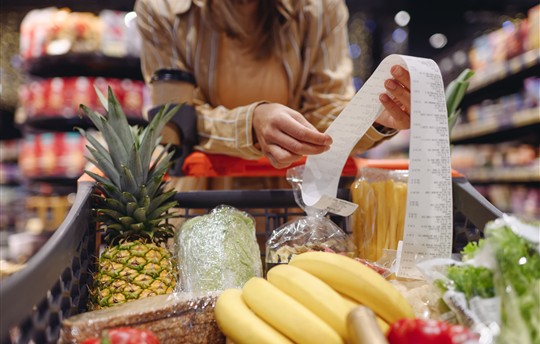
As reported in Part 1 of this blog, today’s grocers face an array of challenges. Overhead costs and market competition are compounded by supply chain complexities, shifting consumer behavior, and rapidly changing tech.
To understand how grocery leaders are responding to these and other pressures, Iridio℠ by RRD recently conducted in-depth, one-on-one interviews with industry leaders at the director level or higher across the United States. The resulting insights in The 2026 Grocery Perspectives Report illuminate how key industry players are competing, growing, and — perhaps most importantly — connecting with shoppers.
In Part 2, we detail the report’s findings on three additional trends challenging grocery operations — and highlight actionable strategies to overcome them, including:
- Focus AI investments on backend efficiency
- Leverage Retail Media Networks
- Prioritize partnerships that drive outcomes
1. Focus AI investments on backend efficiency
The shift toward digital continues to accelerate. Although print is still being utilized — as an entry point for digital app adoption, for instance — digital is now firmly entrenched. AI is a primary component driving digital’s acceleration.
For their part, grocers do believe that AI can be effective. However, they consider it to be much more productive for backend uses as opposed to consumer-facing applications, according to Kevin Bell, VP of Data & Analytics Strategy, Iridio.
“Grocers are relying on [AI] for its ability to solve backend challenges. The most cited uses include demand planning and the tedious data management required to mature retail media networks,” says Bell.
For grocery operations, utilizing AI for these critical tasks will likely result in significant upside:
- Forecasting: predicting future consumer behavior and purchasing decisions
- Labor optimization: aligning employee schedules with customer traffic predictions, automating backroom tasks, streamlining order fulfillment
- Inventory management: hyper-local demand forecasting, automated waste reduction, real-time shelf monitoring
- Operational efficiency: connecting siloed store systems, automating the supply chain, optimizing pricing
2. Leverage Retail Media Networks
As noted in the report, optimizing retail media networks (RMNs) is fast becoming a top priority across the industry. Because grocery retailers typically boast a combination of highly frequent, repeat purchases and rich loyalty card data, it makes sense to leverage this technology to offset their rising operating costs.
RMNs provide grocers with the means to:
- Digitize the physical aisle: Shoppers can be targeted right at the shelf with dynamic aisle screens, smart screens on cooler doors, sampling kiosks, and digital checkout displays. Smart shopping carts can showcase related items or coupons on digital screens as consumers walk down specific aisles.
- Target via Connected TV (CTV) and social: RMNs allow grocers to target shoppers using shopper data to reach them while they’re being entertained — via CTV, social media, and the open web — driving them back to the store.
Grocers, however, have to be careful to avoid ad fatigue and irrelevant recommendations and messaging. This “ad overload” can slow the shopping experience, lengthen transaction times, erode trust, and even lead shoppers to delete an app or disable notifications.
Grocery retailers can ensure they’re providing a cleaner shopper experience by establishing weekly frequency caps, enabling customers to opt in to specific types of notifications, and better aligning recommendations with their customers’ values.
3. Seek out single-source partners that drive measurable outcomes
Grocers are confronting increased complexity when it comes to inventory management, supply chain logistics, omnichannel fulfillment, and more. Compounding the problem: Fragmented vendor relationships, which can overload grocers with superfluous data and disconnected tools, leading to confusion rather than clarity.
"Take inventory of your current vendors across the board. Are there opportunities to simplify execution, integrate operations, and improve results by pivoting toward single-source vendor relationships? Additionally, are you gaining insights or just gathering data? Be precise about your actionable KPIs and seek tailored support to achieve them," says Beth Johnson, Director, Vertical Strategy, Grocery, Iridio.
To ensure they’re making the best decisions when it comes to choosing vendor partners who can actually drive positive outcomes, grocers should:
- Consolidate vendor lists to prevent front- and back-of-store fragmentation and cost inefficiency
- Avoid "analysis paralysis" caused by data overload; don’t confuse data volume with data value — data without context is of little or no value
- Prioritize partners who take accountability for actionable metrics — including customer retention, basket size, and time spent in-store — rather than those partners simply providing generic tools
- Target partners who demonstrate a willingness to own the work, troubleshoot in real time, and align their services to achieve hyper-focused KPIs
Read Part 1 of this blog here. Read the full 2026 Grocery Perspectives Report here.